
Building Resilience For Tourism Boards
Adela Mei
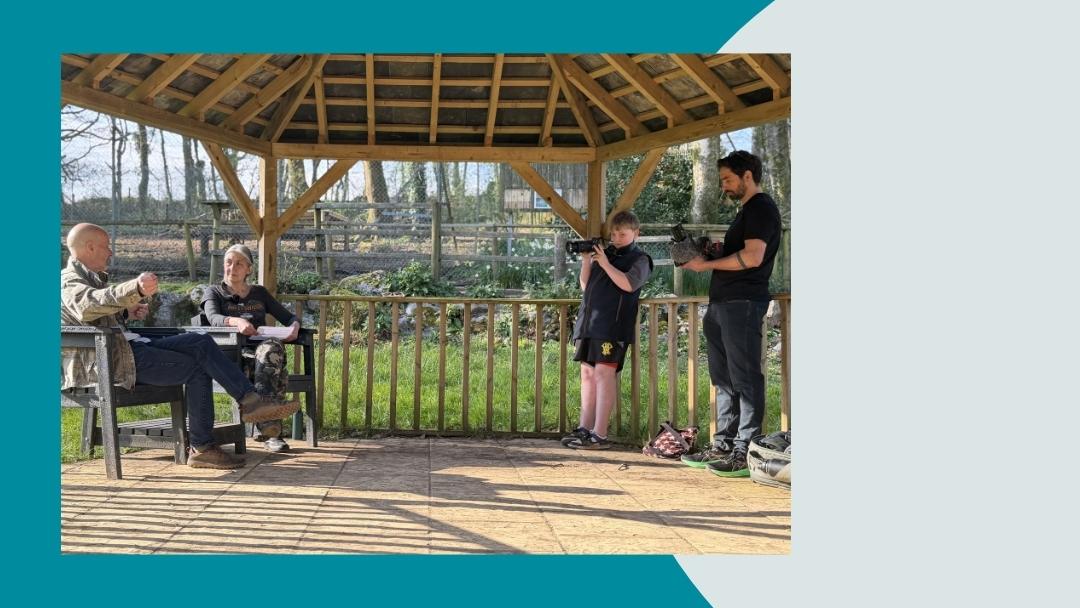
We’re here today at Dartmoor zoo with Benjamin Mee.
Benjamin Mee
Hello there.
Adela Mei
Hello there. And we have some questions for you that we’re hoping you can offer your expert opinion on.
Benjamin Mee
I’ll do my best.
Adela Mei
Do your best. So we’re going to start with call number one.
Benjamin Mee
What does caller number one say?
Adela Mei
Caller Number One says, So
‘What tips do you have for overcoming and dealing with challenges and adversity, with everything you’ve been through?’
Benjamin Mee
Well, I think if this is for small business startups and owners generally, which is kind of what we were when we first started, is expect the unexpected. Don’t expect it to be smooth. It’s going to be really, really choppy. And initially, I think I did everything on adrenaline. It was just like, you know, wake up with a jolt and full, full throttle. But over the period, over the time, that just becomes exhausting, and you start questioning yourself of, why am I even here? Why am I doing this? When everything’s going wrong. And I think it’s really important to have a kind of clear sense of purpose, of what you know, your core belief about it, I have to keep coming back to ‘rescuing this zoo is going to save 250 animals from being euthanized in the first six months’. That was a thing. And increasingly it was ‘providing an income for the people that relied on us’. And it was the right thing to do, no matter what, no matter how logically impossible it seemed, you kind of have to have this inner mission about something. And if you haven’t got that inner mission, it’s going to be very hard, I think, setting out in any kind of business. You’ve got to believe that your thing is worth doing, and is valid and valuable, and that you can promote that and get behind it, because you will be challenged by external events very, very quickly.
Adela Mei
That leads very nicely into the next question of
‘How can you build personal and business resilience, especially in these uncertain times?’
Benjamin Mee
Personal and business resilience? Well, I think the business resilience is incredibly hard at the moment, with random increasing overheads. We’re discussing at the moment how to deal with, but personal resilience, again, I think it’s something a lot of people don’t consider. You tend to think of yourself, especially if you’re entrepreneurial, as indestructible, or you’ve just got endless reserves, and you will soon find that you haven’t. And actually the most important thing that you can do, it’s like that lovely thing in airlines where they say, put on your mask before you put on anyone else’s mask.
Benjamin Mee
And I kept going back to that throughout the whole thing. So two little children to look after. I’m thinking, Yes, but I need to get enough sleep, which is almost impossible when you’ve got little kids. But I need to feel healthy. I need to eat the right food. I need to have some tiny amount of time for myself. And actually, it took a few years, several years before I managed to get that bit together. But I ended up, I do a martial art which I’ve been doing when I was in London for 20 years, and I found one other practitioner down here in Devon, and I made it my thing. Every Saturday, I dropped the kids off to do their things, and I had some ‘me time’ doing this thing, which is very kind of Zen and chills me out. But it was like a religion. It became like, you know, Saturday’s a really important day at the zoo, but it’s the only day where I could have some time for myself, and so I’ve always, I’ve been carving that that day out for me for the last decade, and it’s transformative. It really has made a huge difference. And you’ve really got to kind of look after yourself, and that’s where your resilience comes from.
Adela Mei
‘Can you speak a bit more on the importance of building strong teams, as well as looking after your own well being?’
Benjamin Mee
Yeah, building teams. See, I was a journalist before, a self employed freelance journalist, semi nocturnal, you know, I never employed anybody, and not even a cleaning person or anything. And suddenly we were dropped here, and we had six staff. Now we’ve got 62 and there are tribes here. There are different, different kinds of teams within the overall team. So the animal people are very particular. They like animals. They don’t really like people. The blue team, which is the education and presentation team, they love people. They’re really friendly, and you can’t get away from them when they’re talking to you. You’ve got the back room people, and you’ve got the maintenance people, and they’ve all got different ideas and different priorities. And different kind of tribal superstitions. It can be really, you can spend your whole time brokering peace between these tribes.
Benjamin Mee
And what I found one of the best things that I ever did was to do job swaps. So we had a particular keeper who was very grumpy about her food being ready at exactly the right time, because keepers have a sort of tight, tight schedule, and she would go on the radio and criticise the restaurant over the airways, even on a busy day, if her thing wasn’t ready. So I thought, Okay, let’s get Kate working in the kitchen for a shift and see what it’s like in the kitchen on a busy day. So we had Kate in there, and then we had one of the catering people doing Kate’s round in the animal area. And that that transformed both of them completely. The the animal person understood suddenly that the pressures of the kitchen are huge, and also when she, when she was transferring her skills, when the catering guys were transferring their skills over, we had new food hygiene standards applied to the animal preparation. And it it really settled everybody down for a really long time. And whenever I whenever I possibly can, I encourage people to shadow the keepers or even even do photocopy in the office, whatever, share the load. Explain you’ve all got the same mission. And you can see that from the top. You can see everybody’s got the same mission. But very quickly, as soon as you go into the hierarchy, people just see what’s in front of them and start blaming everyone else. So it’s really important to remember what the overall mission is, and communicate it as much as you possibly can.
Adela Mei
There’s a theme going through all of this, to remember what your original purpose and mission and vision, and it brings everyone onto the same page.
Benjamin Mee
Yes, absolutely core values. You need to understand, you need to believe your core values. And that’s why luckily here, I mean, it’s fairly easy to think this is a good thing. You know, it’s good to have rescued the zoo, and it’s very challenging. It will ask you, it will challenge you in lots of different directions. But rather than get frustrated with individual ones, think of them as all furthering the same aim. And actually, generally, it’s quite it’s not that hard to keep people bought into the message. But as I say, we do have a lot of tribes here, and they do get bogged down in petty, petty grievances, petty differences.
Adela Mei
That’s interesting. It leads on to the next question of,
‘What about the importance of the customer experience when you’re building a resilient business.’
Benjamin Mee
Well, customers, are able to give you a one star review on TripAdvisor if they’re in a bad mood, and that’s really bad, that’s your sort of worst case scenario. And you can do everything you possibly can and give you know, as many five stars as you like, but you get a couple of people who are determined to have a bad time, and there’s almost no pleasing them. I actually got to a point where I would, if there were any kind of staff complaints, I would come and answer them personally, and people would kind of bring me to grumpy customers, and 9 times out of 10, they’re fine. But I had a little rule that if after three, if they make more than three complaints while you’re apologising to them, then give them the money back and escort them off. There was a particular lady, there was no pleasing her. I’m really sorry about it. Whatever it was, we give you an ice cream. You know, ‘I don’t even like this kind of icecream’, okay, well, we give you some tea. Okay, money back. There you go. Bye.
But generally, it’s the customers that pay the bill, and you have, you know, that’s what this business is ialmost completely run on, I mean, obviously there’s donations for conservation and stuff, but there’s a showbiz element. You know, at 10 o’clock, you know, people arrive at eight o’clock, and by 10 o’clock, suddenly it’s showbiz. You can’t have bin bags around or anything that can’t be seen, and you have to bend over backwards and expect that. And that’s the thing. Just make it as good, as good as it possibly can be, and then have your upper limit. And for me, that’s the three complaints in a row.
Adela Mei
So last question is, so
‘How, if we’re speaking to similar businesses or people who work in tourism or other zoos or the entertainment side of things, how can a business stand out from competitors? What is it they could offer differently, or do differently, that can just help them through potentially challenging times?’
Benjamin Mee
Well, I would strongly recommend getting a Hollywood movie made about your business. Sadly, that’s very hard, but it’s a complete accident, actually. But I was a journalist before we got this place, and there were two or three things that I well, many things to consider about moving our whole family here and persuading my entire family to invest, you know, everything in this, in this venture.
And one of them was publicity. If you can bring publicity to it, then you have a chance. As a journalist, I’ve done a lot of adventure travel stuff, and I noticed we did a horse riding thing in Spain one time, and he wrote back to me later, saying, you know, got five pages in a glossy magazine. ‘business has boomed And I’m thinking, of course it has, this is like 1000s of pounds worth of advertising. And my plan here was, we can’t do it unless we have some external light shone on it.
And I actually had a column in the Guardian when we started on DIY, and I thought they’re going to be so much more interested in the zoo than the thing. But they weren’t. They were like, boring, you know. Anyway, where’s your where’s your copy’s late for the DIY. Okay. But they did give me a feature article, one feature article, which, in fact, led to the book, which led to the movie, which was great. But completely you couldn’t plan for that, but you can plan for publicity and something eye catcing, something different, something that makes people remember.
And now of course, there’s lots of social media channels, which people think they can just randomly put out, put out a tweet or a message on LinkedIn, and it’s going to have a miraculous difference. But I think you probably need to employ a professional to help you, to guide you through that labyrinth, and it’s so much more cost effective than the old way. We used to have to print £10,000 pounds worth of leaflets and then pay £20,000 pounds a year to have the leaflets distributed up the M5. And we don’t do that anymore, because we have Instagram and Tiktok and all these things, I don’t have anything to do with. We have young people who do that, and I think that’s the key. Whatever it is that drives you, that’s a passion which you can communicate, and somehow you can use that to communicate your passion through these other channels. And that’s your differentiation from the competition.
Adela Mei
Wonderful. So last, last question.
‘Well, I hear you are going to be doing a keynote talk later on in the year to a tourism board. Is there anything else you would like to add to how they might stand out from their competitors, or tips for them?.’
Benjamin Mee
Well, this is the Tourist Board in Norfolk, and at the time of this, we’re just being bombarded with the fact that Norfolk has won the best place in England to live, and it’s on the news the whole time. So well done whoever made that happen. I think tourist boards, we have a lot of contact with our local tourist boards. And again, they come and do quite rigorous inspections and make sure that everything is absolute. And as soon as you’re on side of them, then they’re a lifeline for the local businesses to be promoted through. And there’s a, there’s a really important symbiosis there for tourist boards, local businesses and the communities that they feed, they literally feed. So it’s a question of cooperating symbiotically together to create the outcome that everybody wants.
Sorry I’m distracted because Fredo the leopard keeps prowling in the background, and I can’t wait to go and have a look at him, because he’s looking at his new cub.
Adela Mei
Well, on that note, thank you very much for your time, Benjamin, and I look forward to seeing you speaking later on to the Norfolk Tourist Board.
Benjamin Mee
Well, thankyou very much, Adela. Been a pleasure.
—
If you’re interested in booking Benjamin for a keynote speech find out more here